

The Ten-Year View
The Ten-Year View
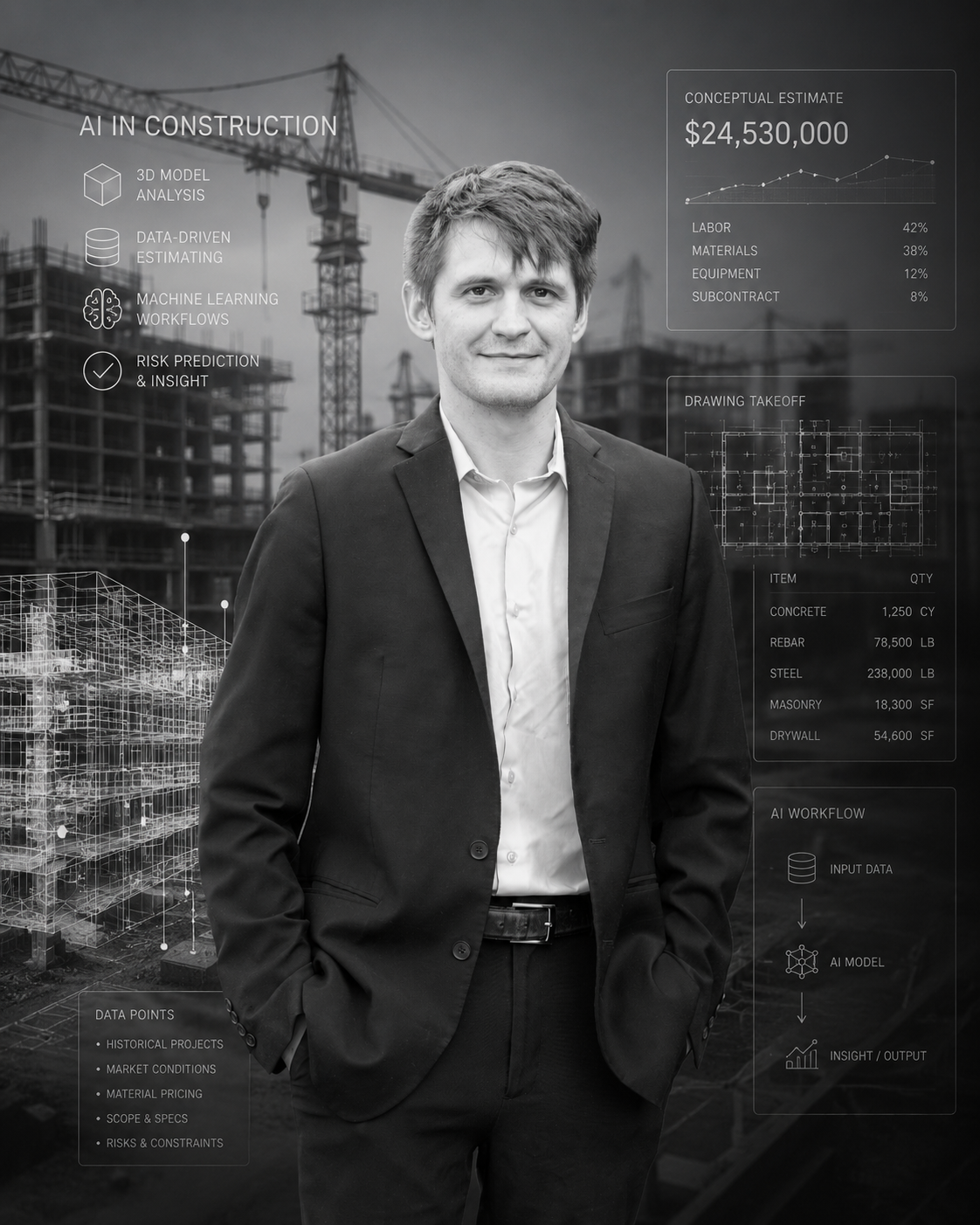
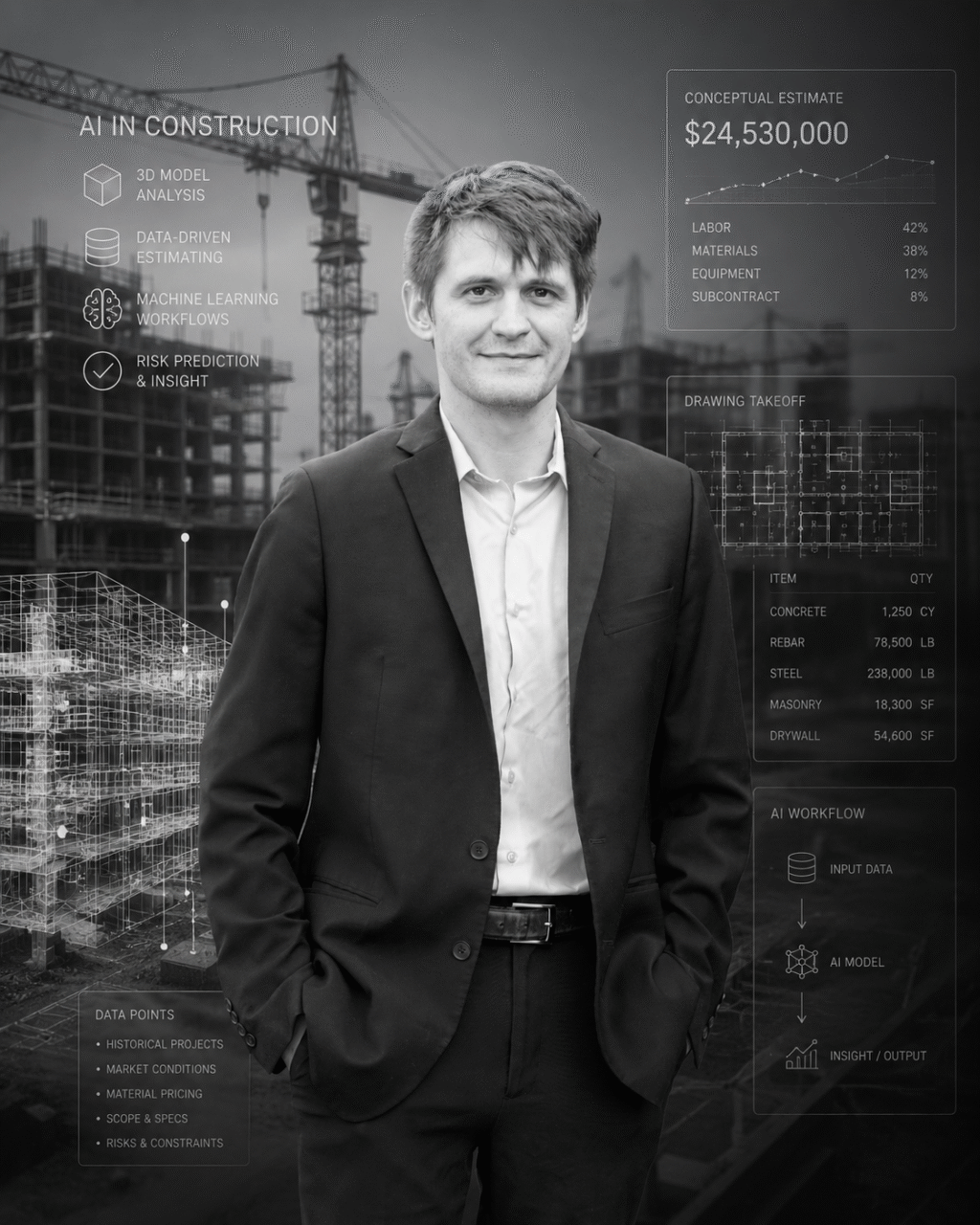
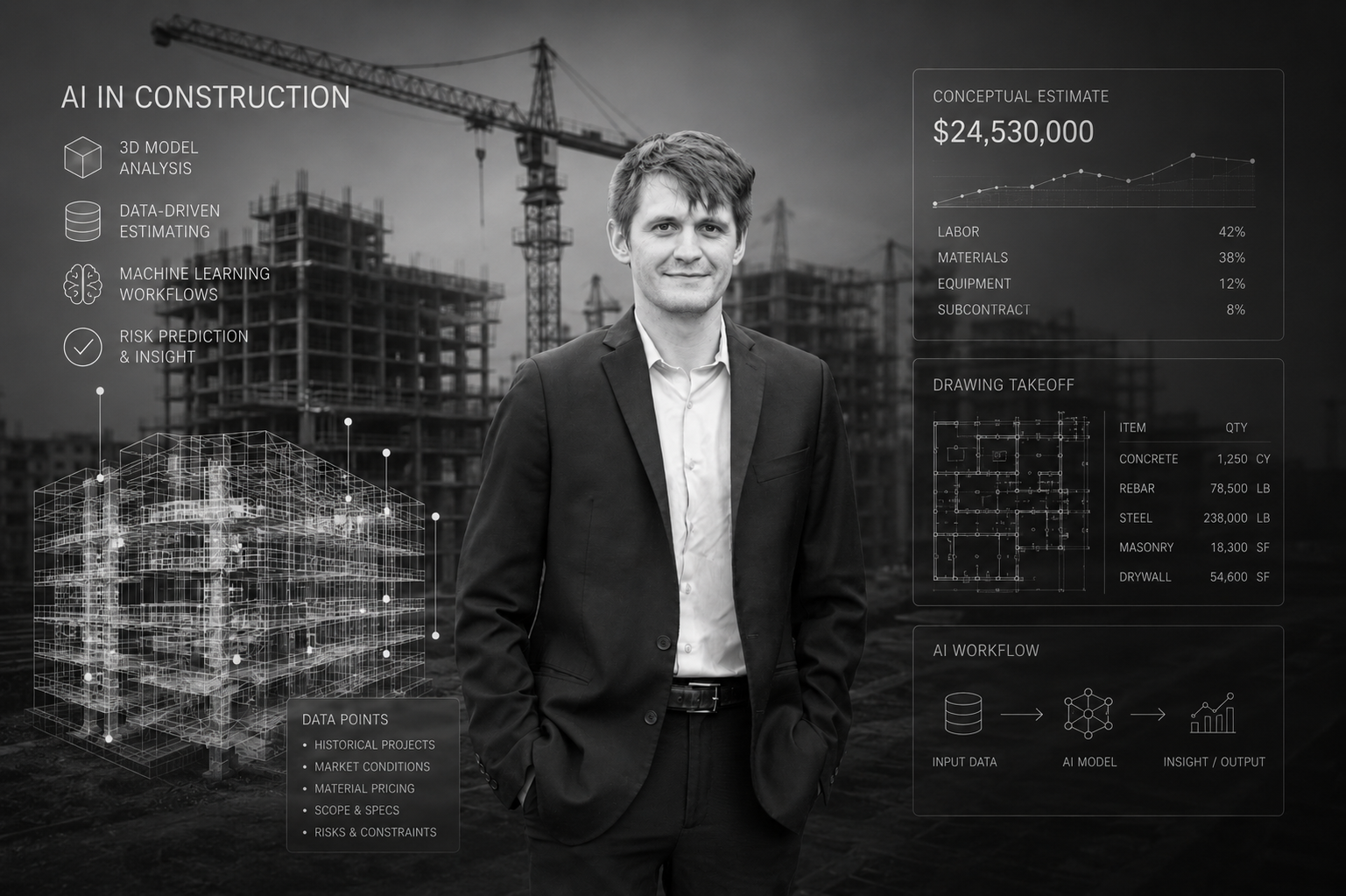
A conversation with Pavel Savine, Director of Research + Development at TOCCI.
Pavel Savine has been watching artificial intelligence develop since 2014 — back when it was still primarily a research discipline, when breakthroughs were measured in academic papers and the construction industry wasn’t paying attention at all.
As TOCCI’s Director of Research & Development, Pavel sits at an unusual intersection: trained as an architect, fluent in code, and deeply familiar with the practical realities of construction — estimating, coordination, pro forma, VDC. He spent a year doing urban design in the Netherlands after winning a fellowship, worked on early AI models for automated drawing takeoffs in 2017, and has spent the better part of a decade thinking about what this technology actually means for the built environment.
We sat down with him to talk about where things are headed — and how to get there responsibly.
You’ve been following AI since 2014. What were you seeing then that most people weren’t?
The early signal was in computer vision. There was a paper — AlexNet — where a neural network beat every bespoke model that had been carefully hand-engineered for a specific task. The computer science community took notice. But this technology had been around since the ’60s. What changed was scale and data. And once I understood why that worked, I had a pretty strong sense that it was going to keep going.
The question for me was always: what does this mean for construction specifically? And how long before it’s actually useful here?
And where did that lead?
Around 2017, I was experimenting with object detection models to see if any of them were good enough to read construction drawings and do takeoffs automatically. I got somewhere with it. The technology wasn’t quite ready, but the direction was clear.
What I kept coming back to was the question of provenance. If a model gives you a number, how do you know where it came from? In estimating, that matters enormously. You need to be able to trace a figure back to a specific job, a specific spec, a specific set of conditions. Without that chain of provenance, you just have a number floating in space. And that’s not useful. That’s actually dangerous.
Can you give an example of what that looks like in practice?
Conceptual estimating is a good one. The straightforward thing to do is point an AI at your historical data and say, give me a budget. And it’ll give you one. And the results will look reasonable. But when you dig in, you’ll find things that are just wrong — a price from a different market, a spec that doesn’t match, a number that has no relationship to anything real.
The more responsible approach is to structure the data first, so that when the AI reasons across it, every output is traceable. It’s more work upfront. But the result is something you can actually stand behind.
The shorthand I use is: I’d rather have a wrong answer I can explain than a right answer I can’t.
There’s a lot of talk in construction right now about AI as a kind of shortcut. How do you think about that?
There’s a concept in programming called “vibe coding” — where you tell an AI to build you an app, and it does, and you keep adding features without ever reading the code. It works until it doesn’t. And when it breaks, you can’t fix it, because you never understood what you built.
Construction is full of the same temptation. It’s easy to generate something that looks like a VE list or a schedule or a budget analysis, label it AI, and have people be impressed. For now, clients and developers are still behind programmers on what this stuff can and can’t do. That window won’t stay open.
The standard is going to rise. And when it does, you want to be the firm that was building things responsibly the whole time — not the one that has to explain why its AI outputs don’t hold up under scrutiny.
What does the next ten years look like from where you’re sitting?
A lot of things are going to be machines talking to machines. Not in a dramatic way — not robots on job sites replacing people. But in the back office, in coordination, in the flow of information between owners, architects, contractors, and subs. The friction in that process is enormous right now. A lot of it is going to get automated.
The firms that will be well-positioned are the ones that understand what the technology can actually do — not just what the demos look like — and that have spent the time building systems and workflows that can absorb it. That takes years. You can’t start that process the day a client asks about it.
We started early. That’s the advantage.

Pavel Savine – Director of Research + Development
Pavel Savine is Director of Research & Development at TOCCI. Trained as an architect, he has spent over a decade building at the intersection of design, technology, and construction — from early computer vision experiments in 2017 to the AI-integrated workflows TOCCI uses today.

Infinite possibilities in defined spaces
Let’s work together to future-proof your next project to perform and delight.